>>

Soft, chewy rose-scented confections made the traditional way, dusted in cornstarch and powdered sugar for an authentic Turkish treat.
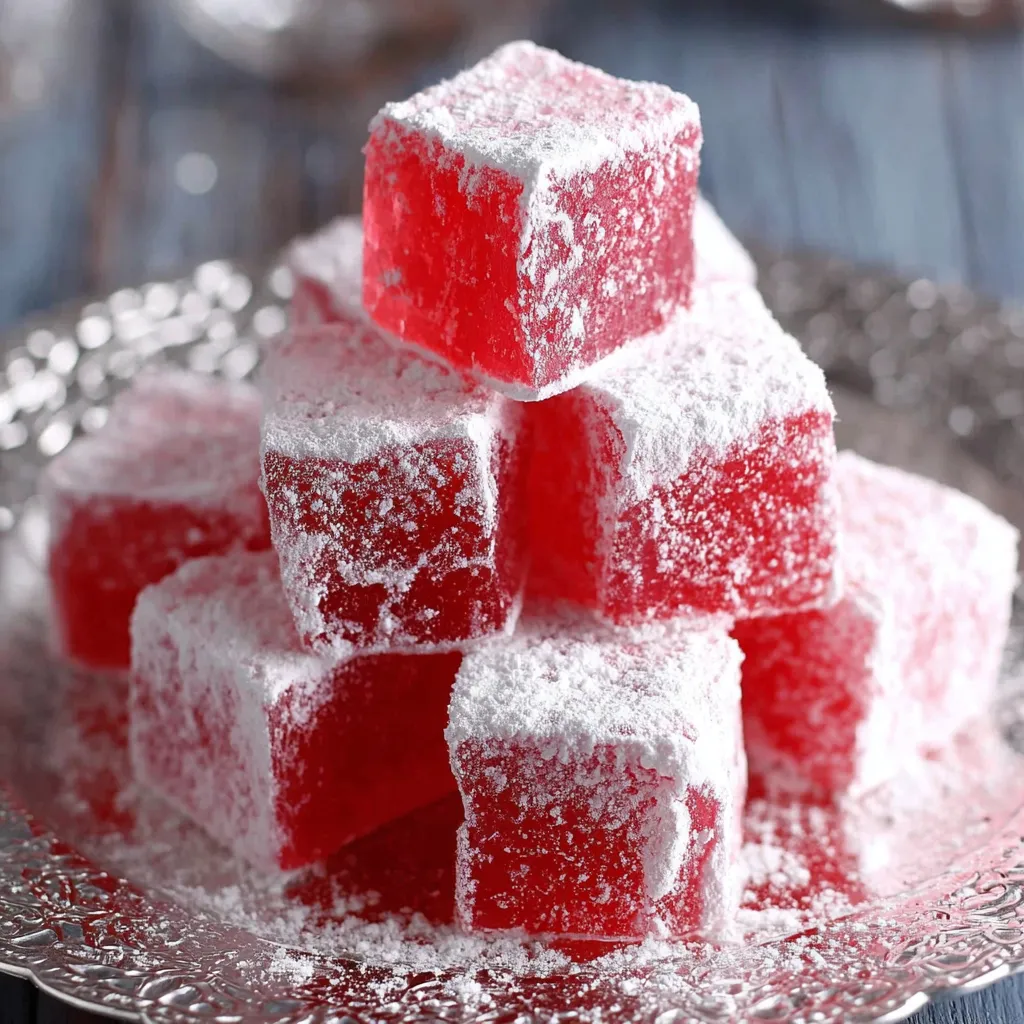
This warm, rose-scented lokum has been a holiday staple in my kitchen for years, the kind of recipe that makes people stop mid-conversation and reach for another cube. I first learned to make Turkish delight during a winter visit with a Turkish friend who showed me how patience and gentle simmering transform a simple syrup and starch slurry into pillow-like candies. The texture is the real magic, a tender, slightly springy chew that yields to your teeth rather than snapping like hard candy, and the rosewater lifts the sweetness into something floral and delicate. Every time I bring a box to a gathering it disappears, often accompanied by laughter and stories about childhood treats.
I make this version when I want to give an edible gift or to bring something a little nostalgic and refined to a party. The process requires attention more than expertise, and the reward is entirely worth the wait. There is a ritual to stirring the thickening mixture, trusting the candy thermometer, and finally cutting the set slab into neat 1-inch cubes, each dusted so they do not cling together. This recipe yields approximately 40 cubes, perfect for sharing with friends alongside strong coffee or packing into small gift boxes for neighbors.
In my kitchen, the first time I served these to my family I watched my children discover the soft chew with the same wonder I felt the first time. I now keep a small box in the pantry for guests and last-minute hostess gifts. Making lokum taught me patience and the satisfying rhythm of slow candy making, and every batch has its own little quirks depending on humidity, altitude, and stove temperament.
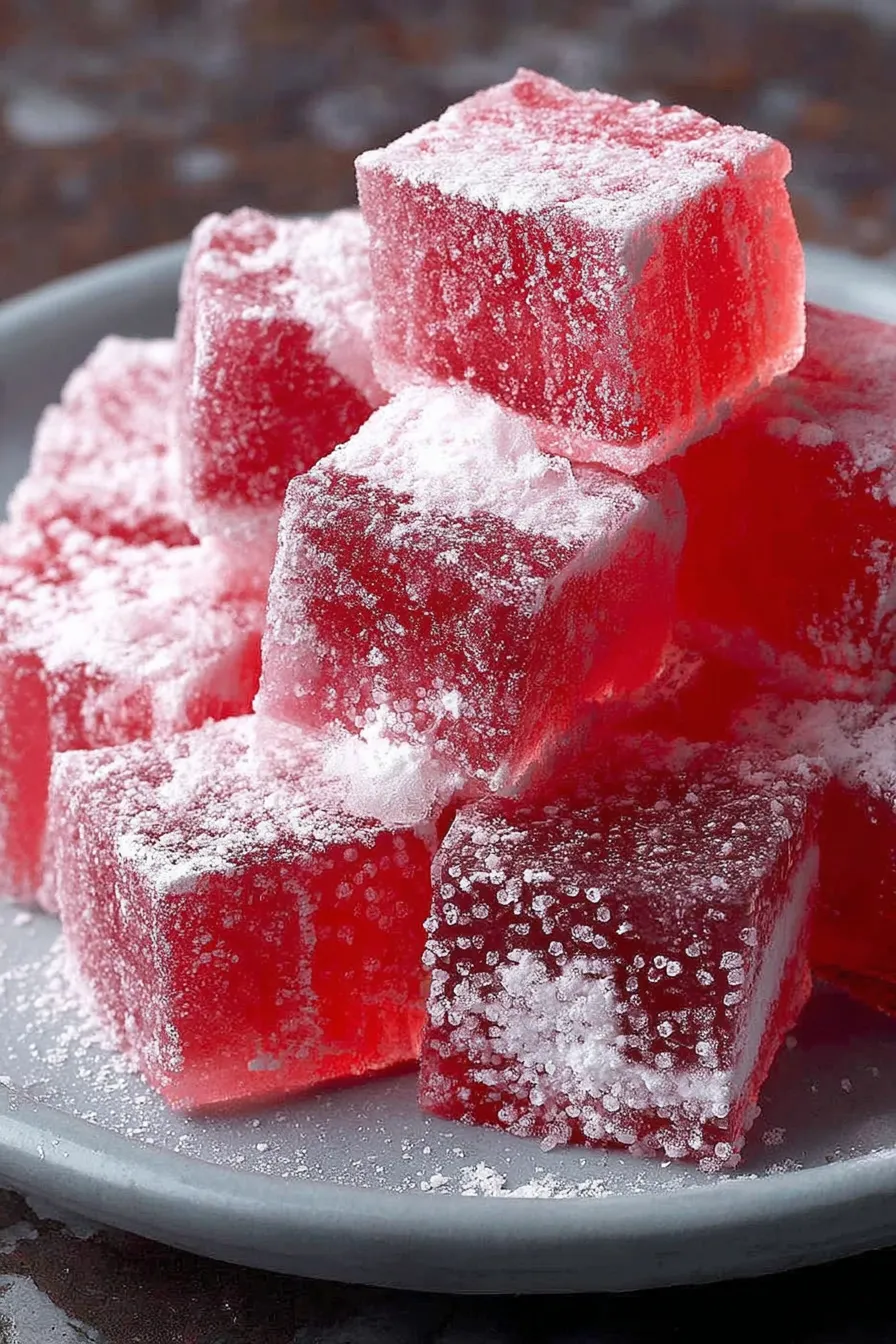
My favorite aspect is how these small pieces carry memories. I once packaged several dozen for a friend hosting a cultural night, and the guests were curious and delighted. The tactile act of cutting and coating became part of the enjoyment. Each batch has shown me subtle differences depending on stovetop behavior and humidity, and it has taught me to read small visual cues: when the gel turns slightly amber and pulls back from the pan, you are close to perfect texture.
Store cubes in a cool, dry place in a single layer or separated by parchment to prevent sticking. Do not refrigerate unless your environment is warm and humid, because refrigeration can introduce moisture and make the coating tacky. For longer storage freeze in a single layer until firm, then transfer to a sealed container for up to three months. To thaw, bring to room temperature slowly while still wrapped to avoid condensation forming on the coating. Replace the outer dredging mix if it absorbs moisture over time to refresh the appearance and mouthfeel.

If you need to modify ingredients, note that cornstarch is essential for the characteristic chew. Tapioca starch creates a slightly more elastic texture, while potato starch will give a softer, cloudier result. For flavor, swap rosewater for 1 1/2 teaspoons orange blossom water or 1 teaspoon lemon extract for citrus notes. If you prefer natural coloring, use pomegranate concentrate sparingly for subtle pink tones, but expect a flavor shift. Avoid gelatin if you want a vegetarian or vegan version; this recipe is starch based and already suitable for plant-based diets.
Serve small cubes on a decorative plate dusted with extra powdered sugar and cornstarch. They are traditional with Turkish coffee and a glass of water to cleanse the palate. For modern pairings try sandwiching two cubes between a plain biscuit for texture contrast or serving alongside mild cheeses and dried fruit for a tea party. When gifting, place in small paper cups and a sturdy box with a sprinkle of extra dredge so pieces stay separate.
Known as lokum, this confection dates back centuries in Ottoman kitchens and was historically flavored with rose, mastic, or pistachios for special occasions. It became a diplomatic sweet, often presented as gifts or served to guests of honor. The traditional technique uses sugar and starch, and regional variations through the Eastern Mediterranean adjust the flavorings and additions such as nuts or fruit pastes. Making lokum connects you with a long culinary tradition of hospitality and ceremony.
In spring add subtle floral variations such as orange blossom or a touch of elderflower. In autumn incorporate warm spices by infusing the sugar syrup with a split vanilla bean or a small cinnamon stick removed before adding the slurry. For winter holidays consider stirring in finely chopped pistachios or dusting cubes with finely chopped dried cranberries for color contrast. Adjust the amount of flavoring so it complements the rose base rather than overwhelming it.
Make the confection two days ahead to allow full setting and easy cutting. Prepare the dredge mix in advance and store it in a sealed jar. When packing portions for work lunches or parties, keep cubes separated by parchment and in shallow containers to avoid crushing. Refresh the coating with a light dusting of cornstarch if any moisture appears before serving. Use a sharp, lightly oiled knife to cut clean edges and wipe between cuts to keep slices neat.
Making lokum is a hands-on, meditative process that rewards patience and attention. Whether you are preparing a small gift or a centerpiece for a gathering, this rose-scented confection brings warmth and a bit of old-world charm to the table. I hope you enjoy the ritual as much as the final bite.
Use a heavy-bottomed pan and a reliable candy thermometer to avoid scorching and ensure accurate temperature.
Whisk the cornstarch slurry until completely smooth before adding to the hot syrup to prevent lumps.
Dust the set slab generously with cornstarch before cutting to make removal and slicing easier.
Stir more frequently toward the end of simmering to prevent the mixture from sticking and to achieve even coloring.
Avoid refrigerating unless necessary, as moisture can make the coating tacky.
This nourishing classic turkish delight (lokum) with rosewater recipe is sure to be a staple in your kitchen. Enjoy every moist, high protein slice — it is perfect for breakfast or as a wholesome snack any time.
Allow the mixture to simmer until it thickens and turns a medium-dark amber. This may take one to two hours. Patience is key to achieving the proper chew.
Yes, freeze in a single layer until firm, then transfer to a sealed container for up to three months. Thaw wrapped at room temperature to avoid condensation.
This Classic Turkish Delight (Lokum) with Rosewater recipe makes perfectly juicy, tender, and flavorful steak every time! Serve with potatoes and a side salad for an unforgettable dinner in under 30 minutes.
Combine sugar, citric acid, and 3/4 cup water in a heavy-bottomed saucepan and stir until the sugar dissolves. Heat to a simmer to prepare for boiling.
Bring to a rolling boil then reduce to a steady simmer. Use a candy thermometer and cook until the syrup reaches 250 degrees Fahrenheit, about 15 to 30 minutes depending on conditions.
Whisk 1/2 cup plus 1 tablespoon cornstarch with 2 cups plus 5 teaspoons water until no lumps remain, creating a smooth slurry for incorporation.
Remove pot from heat and slowly whisk in the cornstarch slurry to avoid lumps. Once combined, return to medium-low heat and whisk until the mixture gels.
Keep at a gentle simmer and stir every six to seven minutes, occasionally more often near the end. Continue for one to two hours until medium-dark amber and thick but still pourable.
Turn off the heat and stir in 1 1/2 teaspoons rosewater and about 10 drops red food coloring, adjusting to taste and desired hue.
Lightly oil a 5 by 7 inch container or line with plastic wrap. Pour the mixture in and let it cool at room temperature for at least five hours, ideally overnight.
Dust the surface with 1/4 cup cornstarch, remove the slab, dust again, and cut into approximately 40 one-inch cubes. Toss cubes in a blend of 2/3 cup cornstarch and 1/3 cup powdered sugar to prevent sticking.
Last Step: Please leave a rating and comment letting us know how you liked this recipe! This helps our business to thrive and continue providing free, high-quality recipes for you.
Leave a comment & rating below or tag
@feastu on social media!

Delightfully spooky and sweet, these bite-sized mummy cake balls combine moist cake, creamy centers, and a vanilla candy shell for effortless Halloween fun.

Fluffy homemade donuts crowned with a shimmering galaxy glaze. Fry or bake, swirl bold colors, and watch these showstoppers disappear fast.
Buttery shortbread crust meets gooey pecan pie filling in easy bar form, perfect for holidays, bake sales, and cozy weeknights.
Leave a comment & rating below or tag @feastu on social media!
Enjoyed this recipe? Share it with friends and family, and don't forget to leave a review!
This recipe looks amazing! Can't wait to try it.
Comments are stored locally in your browser. Server comments are displayed alongside your local comments.

Join to receive our email series which contains a round-up of some of our quick and easy family favorite recipes.