>>

A rustic, slightly sweet artisan loaf studded with tart cranberries, plump raisins, and crunchy walnuts, flavored with warm cinnamon—perfect for breakfast or a cozy afternoon snack.
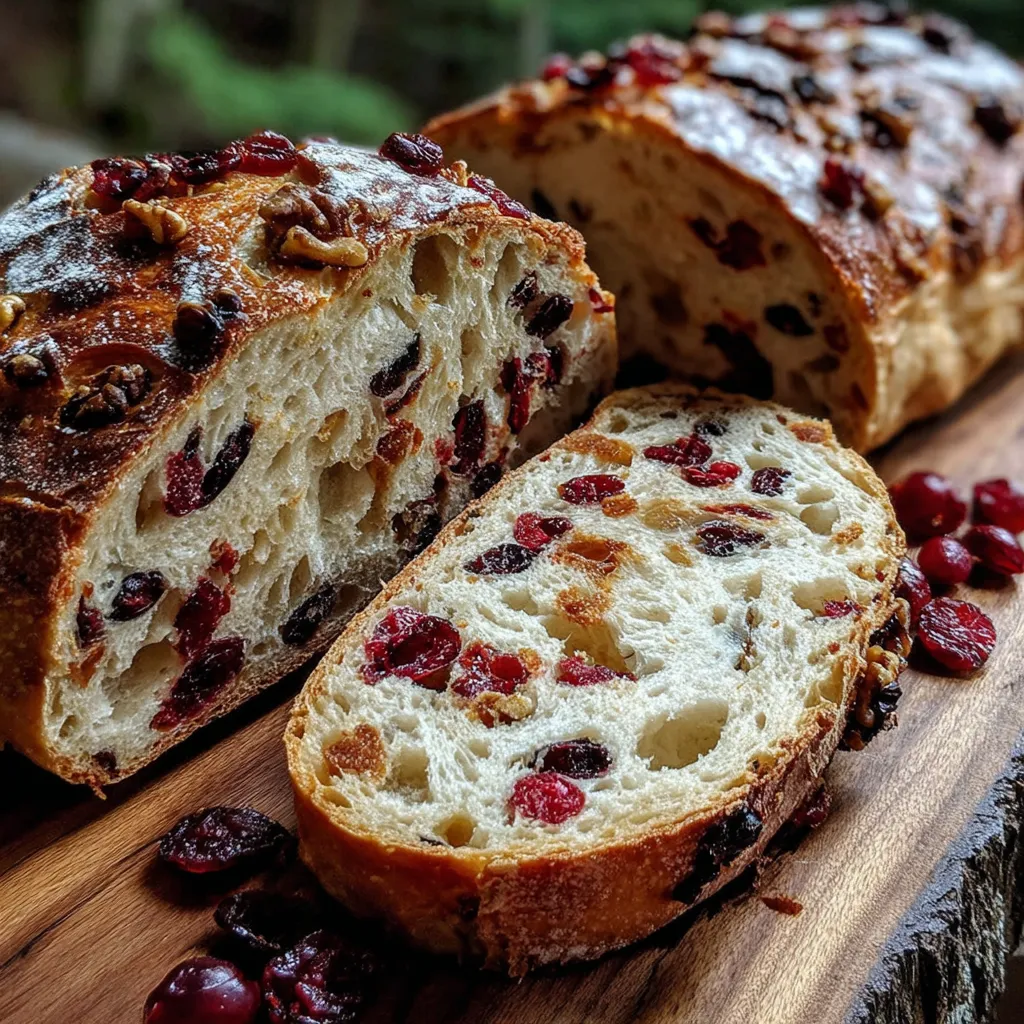
This loaf began as a sleepy weekend experiment and quickly became a household staple. I first mixed these simple pantry ingredients on a rainy Saturday when I wanted a bread that tasted like autumn but worked year-round. The dough is forgiving: no kneading required, a long slow rise for flavor development, and a gentle overnight chill that makes the crumb easier to handle the next day. The finished bread has a crisp, deeply browned crust, an open, slightly chewy crumb, and pockets of sweet-tart fruit with the warm background of cinnamon and the satisfying crunch of walnuts.
What makes this particular combination special is balance. The honey and dried fruits add just enough sweetness to elevate the aroma without overpowering the wheat; cinnamon keeps it cozy; walnuts introduce texture and a toasty note that pairs beautifully with butter or sharp cheese. I remember the first time I sliced into it at breakfast—my partner and I paused, ate a slice, and immediately planned sandwiches for the week. It’s the kind of loaf that travels well to potlucks and holds up for breakfasts throughout the week.
I learned that the overnight chill not only improves manageability but intensifies flavor; the next day the dough is easier to score and bakes into a loftier loaf. My family’s favorite memory is bringing this to a small holiday gathering—people asked for the recipe and then for seconds. It’s one of those simple successes that makes the time invested in the slow rise worth every minute.
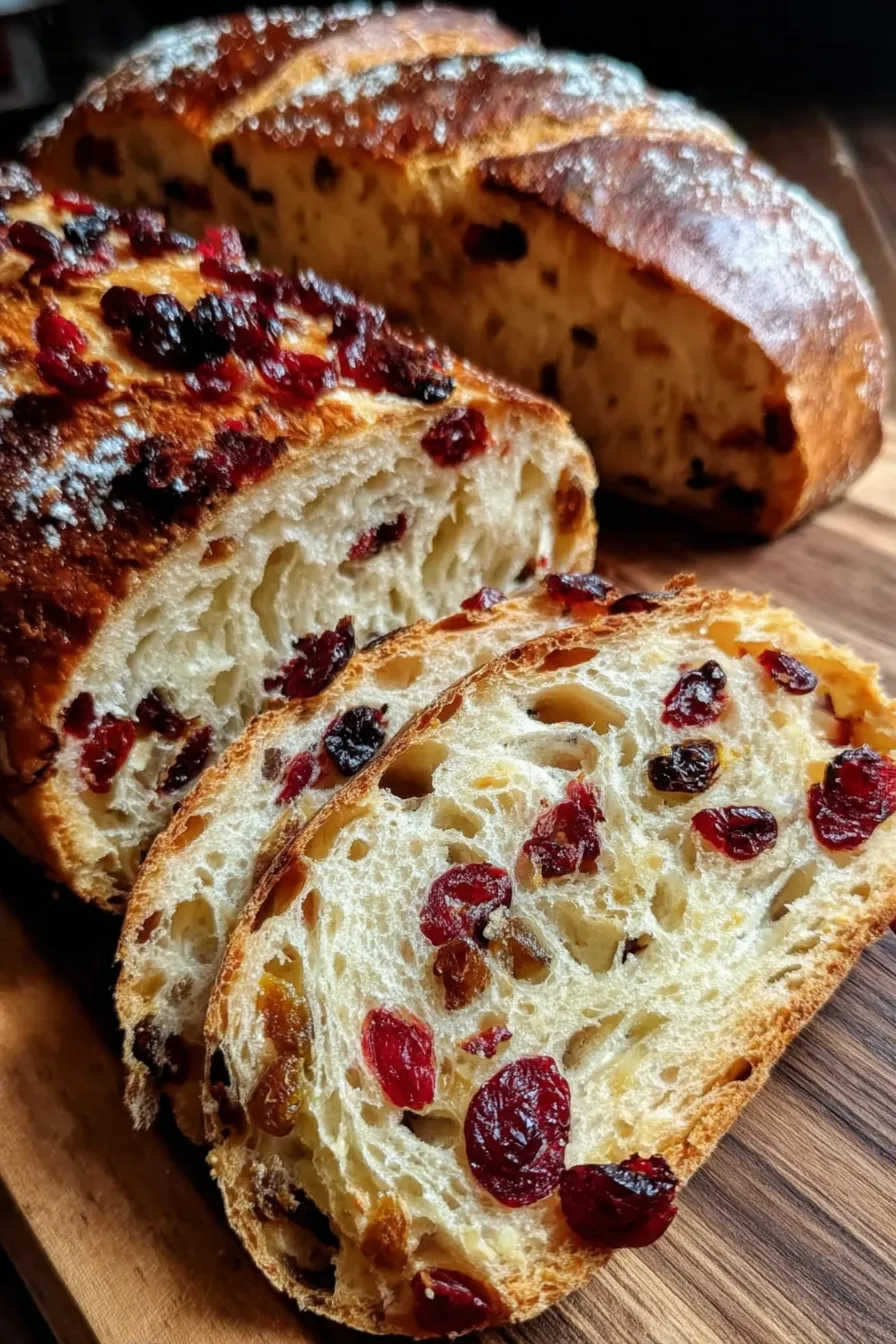
My favorite thing about this loaf is how adaptable it is—every time I tweak the fruit ratio slightly the character changes. Once I swapped apricots for cranberries and found a wonderful summery version. Family members routinely request a slice warmed and smeared with butter and a little ricotta; it’s a simple pleasure that makes busy mornings feel special.
Store the cooled loaf in a paper bag or a loosely closed cloth bag at room temperature for up to 3 days to maintain the crust’s texture. For longer storage wrap tightly in plastic wrap and then foil and freeze for up to 3 months. Thaw at room temperature or toast straight from frozen slices. If the crust softens after refrigeration, re-crisp under a 375°F oven for 8 to 10 minutes to restore crunch without over-drying the crumb. Avoid storing in the refrigerator unless your kitchen is very humid, as refrigeration accelerates staling.
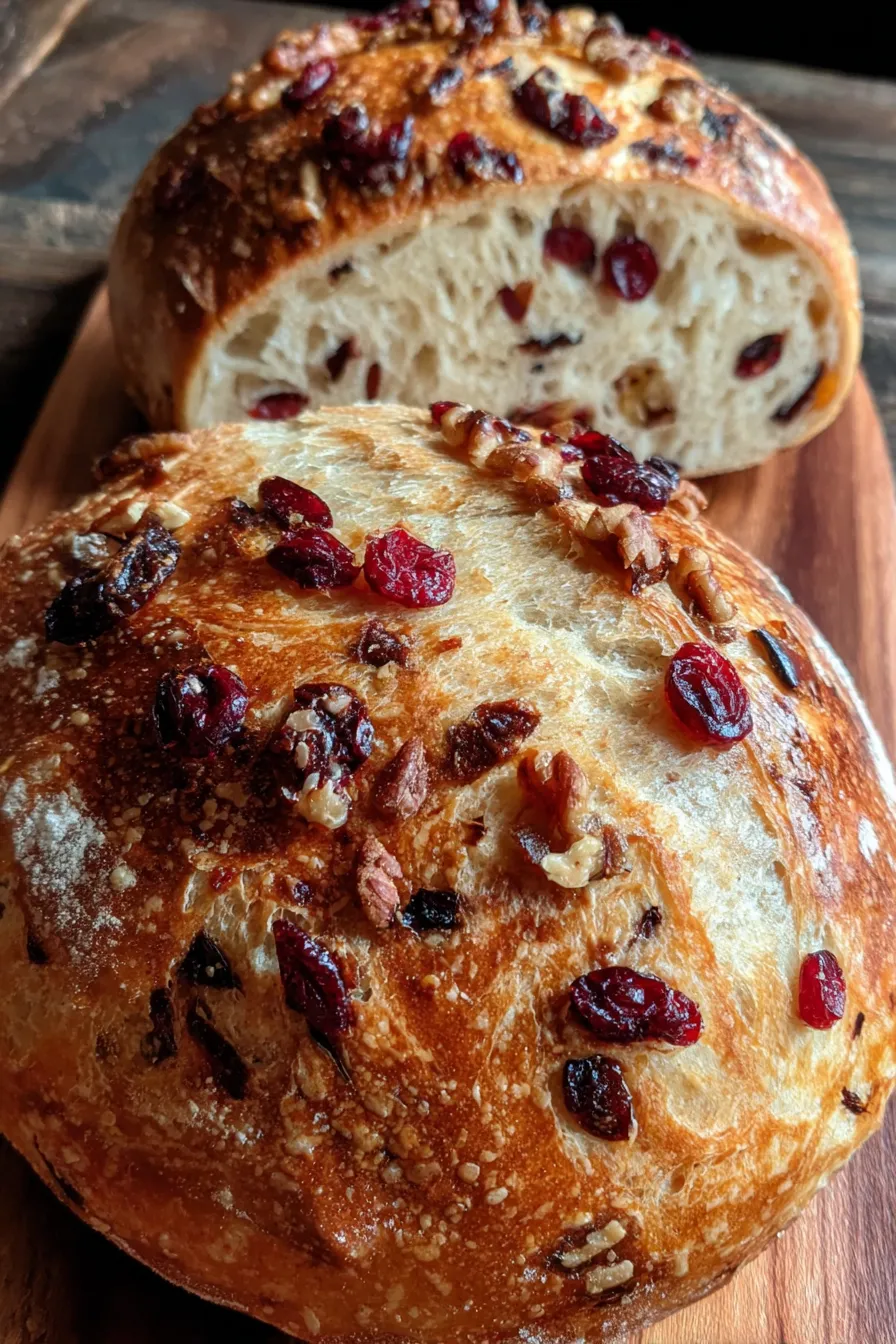
If you prefer a different nut, replace walnuts with pecans (1:1) for a sweeter, buttery note or with chopped almonds for a firmer crunch. Swap dried cherries or chopped dried apricots for cranberries at a 1:1 ratio for different fruit profiles. For a dairy-free spread, use olive oil or a nut butter instead of butter. If you need a slightly lower sugar loaf, reduce honey to 1 tablespoon and increase baking time slightly; the fruit will still provide sweetness. Do not substitute gluten-free flour directly without a tested blend, as structure and hydration will change significantly.
Serve warm slices with salted butter and a drizzle of honey for breakfast, or pair with a sharp cheddar or goat cheese for a savory contrast. It makes a lovely base for open-face sandwiches with smoked turkey and crisp greens. For dessert-style serving, toast slices lightly, spread mascarpone, and top with sliced fresh pears or apples. This loaf shines at brunches, holiday spreads, and as a thoughtful homemade gift wrapped in parchment.
This loaf takes inspiration from rustic European country breads that combine dried fruit and nuts for extended shelf life and flavor—think of the fruit-studded breads common in Central Europe and the northern United States. Combining dried fruit with bread appears in many traditions as a way to celebrate harvests and holidays. Cinnamon and walnuts are classic pairings in American baking, brought together here in an artisan format that reflects both homestyle and bakery techniques.
Winter: increase walnuts and add a pinch of nutmeg for holiday warmth. Spring: swap raisins for chopped dried apricots and add lemon zest to brighten. Summer: reduce fruit slightly and add seeds like pumpkin or sunflower for texture. Fall: incorporate a tablespoon of molasses and use dark raisins for deeper flavor. Adjust hydration slightly when adding heavier mix-ins to keep the dough pliable.
Shape multiple small boules and refrigerate; freeze unbaked portions on a tray then transfer to a bag—bake from frozen, adding 5 to 10 minutes to bake time. Slice the baked loaf and portion into single-serve bags for easy grab-and-go breakfasts. For weekly breakfasts, toast slices, top with nut butter and banana, and store prepared slices in airtight containers; reheat in a toaster oven for 2 to 3 minutes before serving.
Enjoy the scent of baking and the simple joy of slicing into a loaf you made yourself. This bread rewards patience and celebrates seasonal flavors—make it once and you’ll find reasons to make it again and again.
Proof yeast in warm (not hot) water to ensure activity; ideal water temperature is about 105 to 110°F when using active dry yeast.
Toast walnuts briefly in a dry pan to intensify flavor and reduce the chance of sogginess inside the loaf.
Allow the loaf to cool fully before slicing to prevent a gummy crumb; at least 1 hour is recommended.
Use a Dutch oven with a tight-fitting lid to trap steam and achieve a crisp, glossy crust.
If fruit is very dry, soak in warm water for 10 minutes, drain, and pat dry before adding to dough.
This nourishing cranberry raisin walnut cinnamon artisan bread recipe is sure to be a staple in your kitchen. Enjoy every moist, high protein slice — it is perfect for breakfast or as a wholesome snack any time.
This Cranberry Raisin Walnut Cinnamon Artisan Bread recipe makes perfectly juicy, tender, and flavorful steak every time! Serve with potatoes and a side salad for an unforgettable dinner in under 30 minutes.
Stir water and honey together, sprinkle yeast on top, and let rest for 5 to 10 minutes until foamy to ensure yeast is active.
Combine flour, salt, and cinnamon in a large bowl and whisk to distribute evenly before adding liquids.
Mix wet and dry ingredients until the mixture is shaggy; fold in cranberries, raisins, and walnuts without overworking the dough.
Cover the bowl and let the dough rise at room temperature for 8 to 10 hours until puffy and aerated.
Shape the dough into a round, place in a floured basket or bowl, cover, and refrigerate overnight for 8 to 12 hours.
Preheat a Dutch oven with lid in the oven at 450°F for at least 30 minutes to ensure even, intense heat.
Score the dough and bake covered for 30 minutes to trap steam and promote oven spring.
Uncover and bake for an additional 15 to 20 minutes until deep golden and internal temperature reaches 200 to 205°F.
Cool the bread completely on a wire rack for at least 1 hour before slicing to set the crumb properly.
Last Step: Please leave a rating and comment letting us know how you liked this recipe! This helps our business to thrive and continue providing free, high-quality recipes for you.
Leave a comment & rating below or tag
@feastu on social media!

Delightfully spooky and sweet, these bite-sized mummy cake balls combine moist cake, creamy centers, and a vanilla candy shell for effortless Halloween fun.

Fluffy homemade donuts crowned with a shimmering galaxy glaze. Fry or bake, swirl bold colors, and watch these showstoppers disappear fast.
Buttery shortbread crust meets gooey pecan pie filling in easy bar form, perfect for holidays, bake sales, and cozy weeknights.
Leave a comment & rating below or tag @feastu on social media!
Enjoyed this recipe? Share it with friends and family, and don't forget to leave a review!
This recipe looks amazing! Can't wait to try it.
Comments are stored locally in your browser. Server comments are displayed alongside your local comments.

Join to receive our email series which contains a round-up of some of our quick and easy family favorite recipes.